Seattle seeks consultants to help homeowners develop their land
By EMMA LAPWORTH
A/E Editor
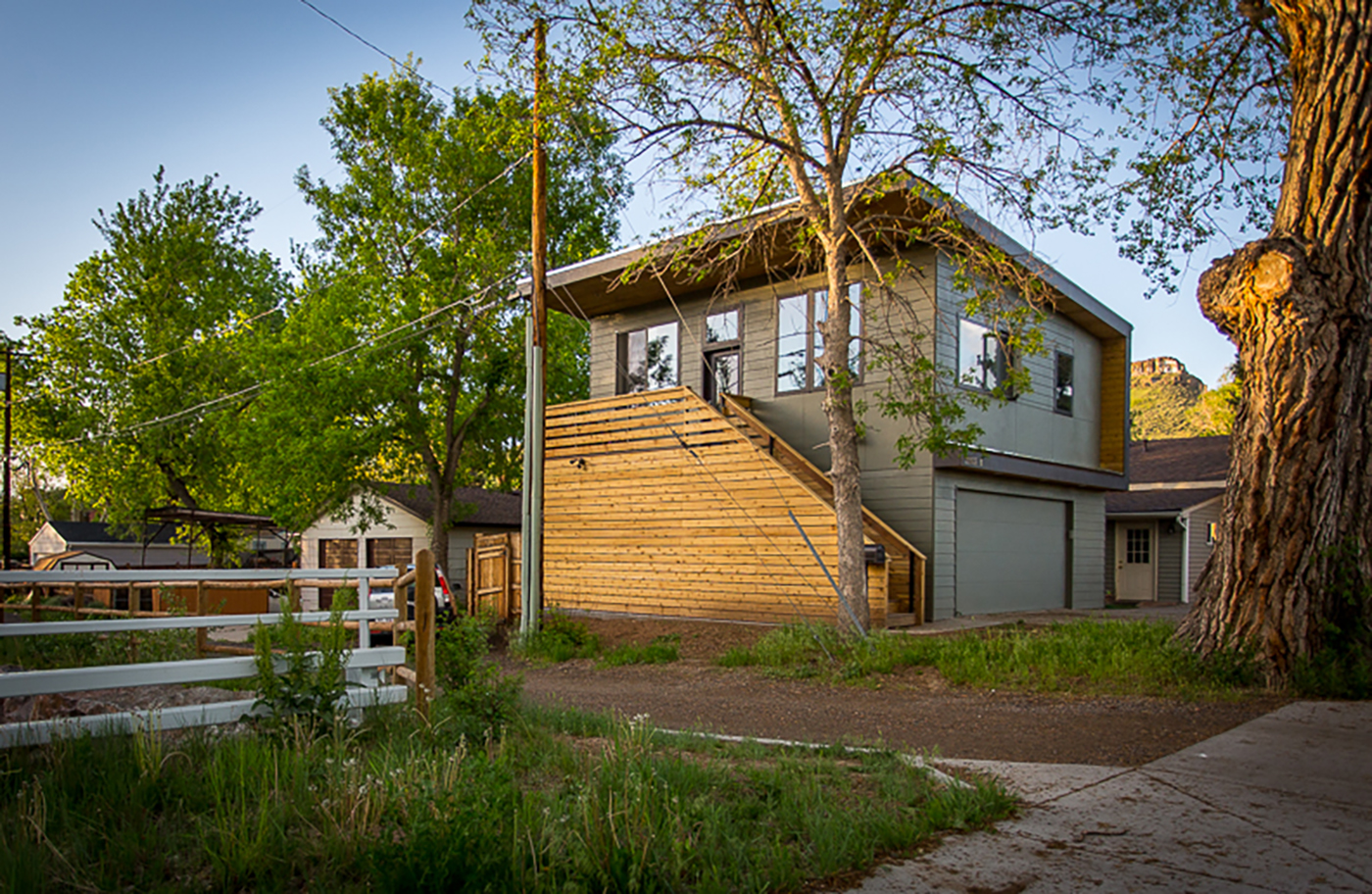
Photo via city of Seattle [enlarge]
This ADU, designed by Shape Architecture, is on the city’s list of pre-approved designs.
To increase affordable housing supply and help stabilize vulnerable legacy homeowners, the Seattle Office of Planning and Community Development (OPCD) is launching two programs aimed at supporting homeowners who wish to develop their property with infill projects or ADUs; the Legacy Homeowner Development Support program and the Partnership for ADU Development (PAD) program.
OPCD recently issued two solicitations aimed at procuring specialized consultants to partner with the city on these efforts. Selected partners will deliver education and technical support to legacy homeowners to advance infill development projects and will help refine program design for the PAD pilot.
The legacy homeowner program is a response to new neighborhood residential zoning that took effect in January and allows at least four units to be built on all residential lots in the city. The program is intended for low-income legacy homeowners seeking to undertake infill development on their own property and will provide education, networking, technical assistance, and pre-development support.
The RFP for this program is divided into two workstreams. One is focused on providing education and networking support, the other on pre-development technical assistance. For the former, one to three consultants will be selected and awarded up to $200,000 per consultant. For the latter, one to three consultants will be selected and awarded up to $500,000 per consultant.
Consultants are encouraged to apply for either or both workstreams. Responses are due Sept. 25. Contract awards are anticipated by end of the year.
The PAD pilot aims to create affordable rental housing while stabilizing vulnerable homeowners. In this program, a homeowner will partner with a nonprofit development partner who then builds two homes in their backyard. Construction of these homes would be funded through a combination of public, philanthropic, and conventional sources. After completion, the partner would own and rent the units for a period of 10 years to renters making up to 80% of area median income. At the end of the 10 years, the homeowner may acquire the units from the partner at a deeply discounted rate. Throughout the process, the homeowner would maintain ownership of their land.
OPCD is looking for one or more qualified partners to work with OPCD on this program. Each selected partner will be awarded up to $50,000 to compensate them for their support in advancing program design and to build their own operational capacity.
Responses are due Oct. 5. Partner selection is expected by the end of the year.
Construction funding for the PAD pilot is yet to be identified and secured. Once that happens, OPCD plans to invite the selected partners to participate in a closed-pool request for proposals to award the construction of the first homes in the pilot project.
OPCD hosted two virtual sessions for potential submitters to learn more and ask questions about these solicitations:
• Session 1: Legacy Homeowner Development Support RFP Q&A, 10 a.m.-11:30 a.m. (sign up at https://tinyurl.com/
• Session 2: PAD Partner RFQ Q&A, 2-3:30 p.m. (sign up at https://tinyurl.com/
Both initiatives are funded through a HUD PRO Housing grant awarded in 2024.