92 affordable units top out in Central District
By EMMA LAPWORTH
A/E Editor
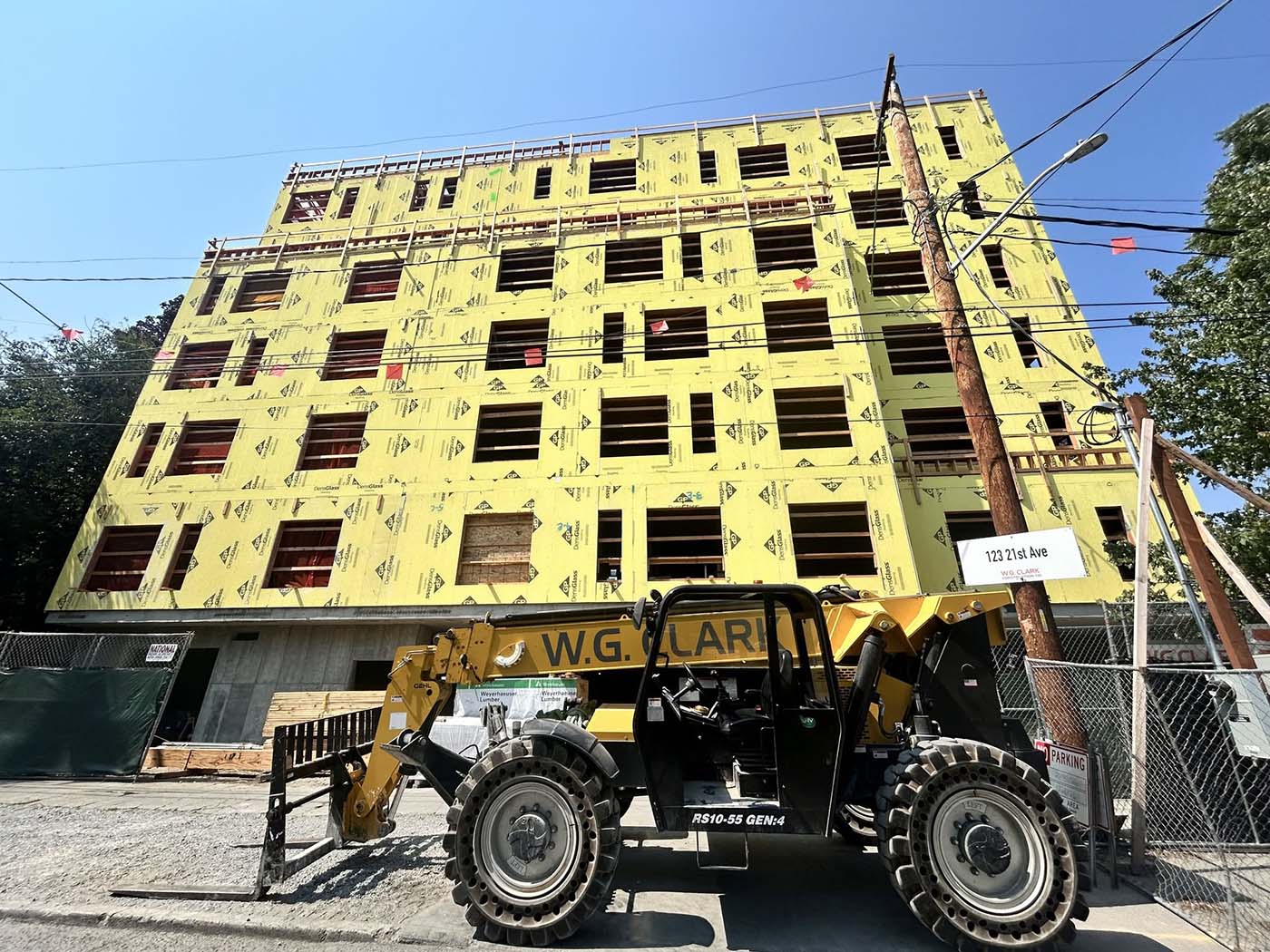
W.G. Clark photo, via Facebook [enlarge]
W.G. Clark is the building the project. The west building is pictured.
New Hope Family Housing topped out at the end of August in Seattle’s Central District.
The two-building development comes from the New Hope Community Development Institute (NHCDI) and the Low Income Housing Institute (LIHI), and is located on land owned by New Hope Missionary Baptist Church.
The community will have two seven-story buildings on 21st Avenue: an east building at 116 21st Ave. and a west building at 123 21st Ave. The buildings will face one another across the street. WG Clark is the general contractor. Weber Thompson is the architect.
The west building will have 70 units with 39 studios, 14 one-bedroom, and 17 two-bedroom apartments. The east building will have 22 units with five studios, six one-bedroom, and 11 two-bedroom apartments. All the housing will serve families and individuals earning up to 50% and 60% of the area median income.
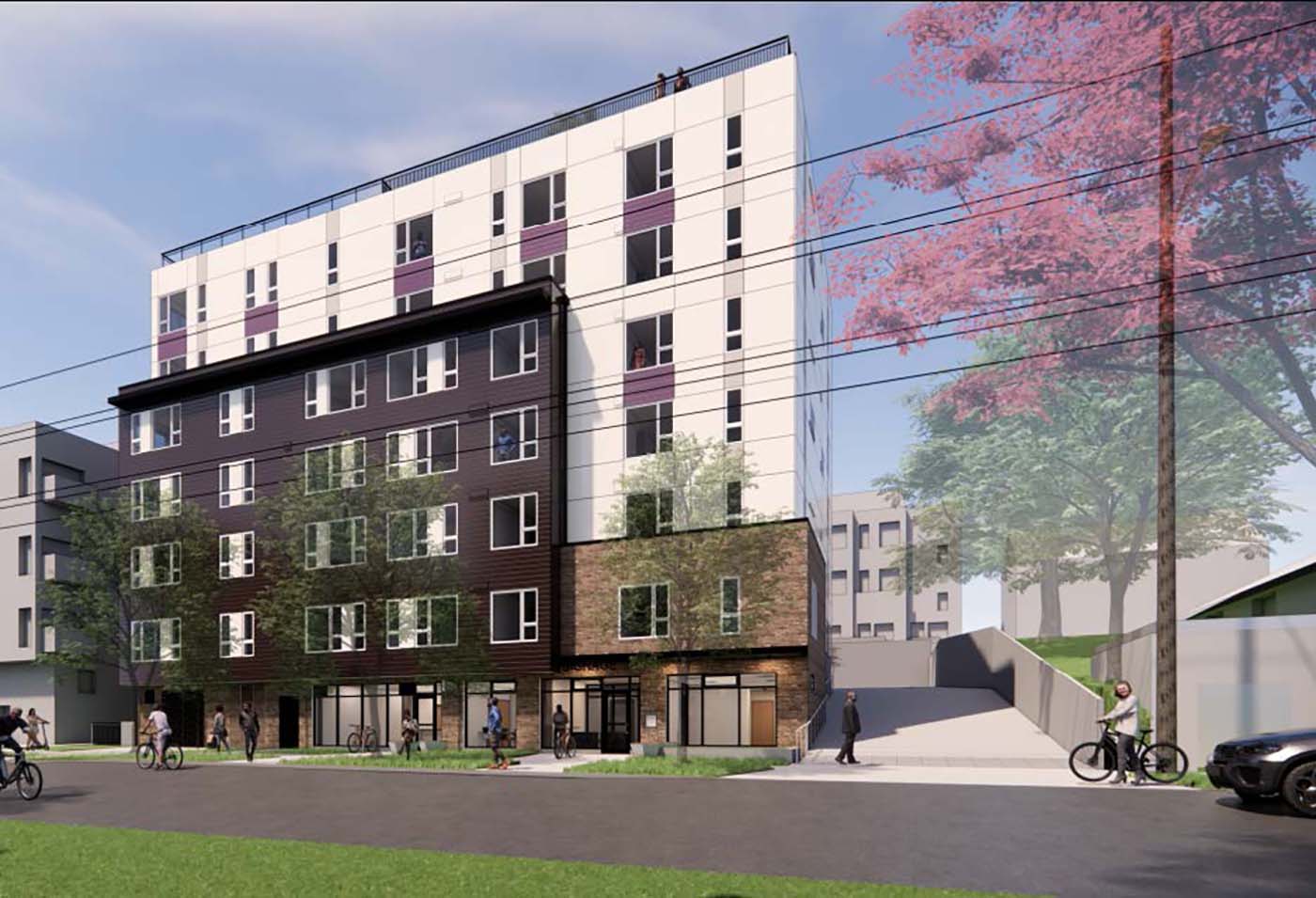
The west building will have 70 units.
On-site amenities include community rooms for each building, a roof-top terrace, ground-floor retail space for the nonprofit Clean Greens Farm & Market and office space for the church and NHCDI. On-site parking is located behind the west building.
Construction began in November 2025. Completion is scheduled for April 2027.
Total project size is 71,530 square feet.
In a press release, LIHI Executive Director Sharon Lee said the construction of the 92 new apartments is made possible by a city code that provides increased density on land owned by religious organizations. “Without this code we would be topping off at the sixth floor instead of the seventh floor,” she said.
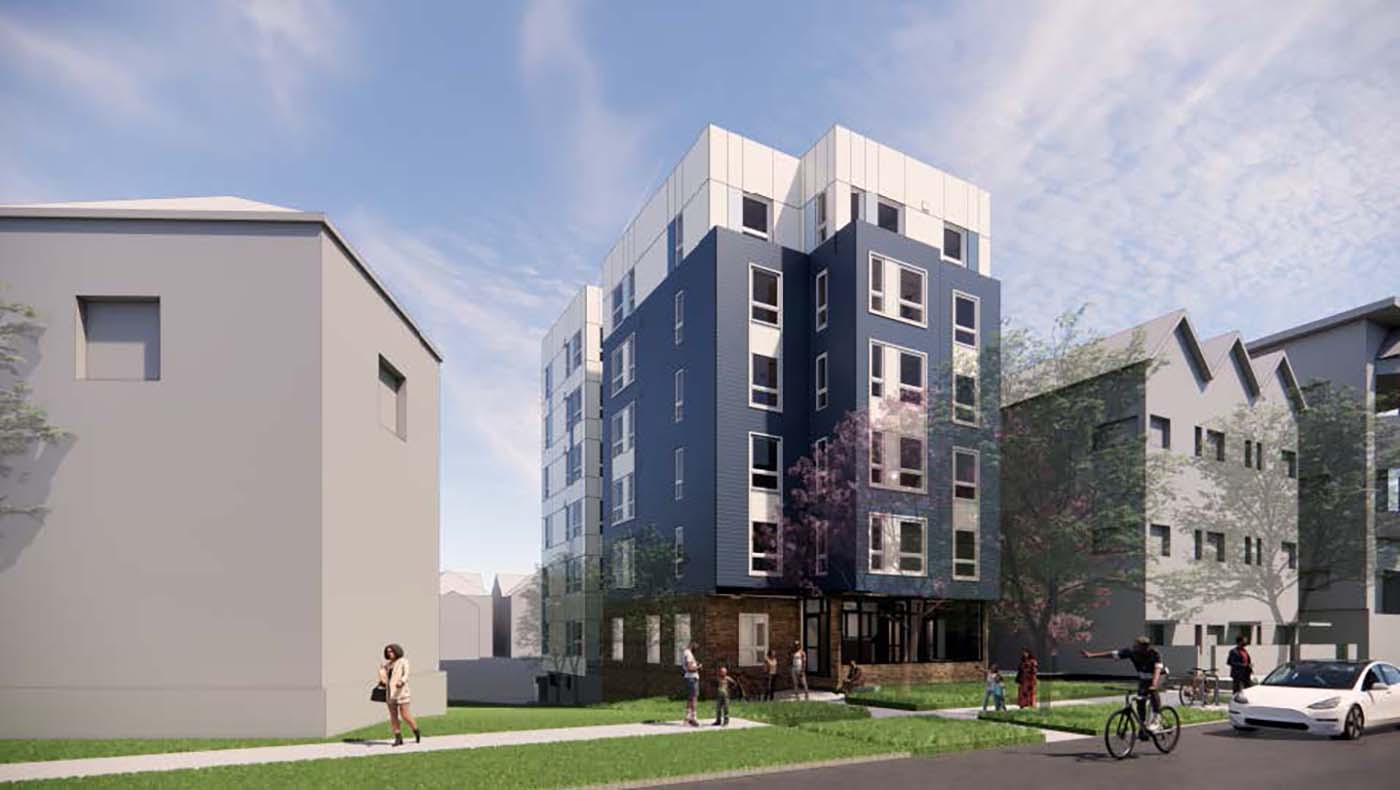
Renderings by Weber Thompson [enlarge]
The east building will have 22 units. The buildings will face each other across 21st Avenue.
The church has signed a 99-year ground lease with NHCDI and LIHI for the site, allowing the church to benefit financially and preserve its ownership in high-valued land in the area.
According to the release, other notable historic African American churches have sold or are under pressure to sell their property.
The cost of the development is $53 million. Financing sources include the Seattle Office of Housing, the State Housing TrustFund and Transit Oriented Development funds, Washington State Local Community Projects funding, Washington Community Reinvestment Association, Washington State Housing Finance Commission, Seattle Equitable Development Initiative funding, KeyBank and low-income housing tax credits from Enterpr